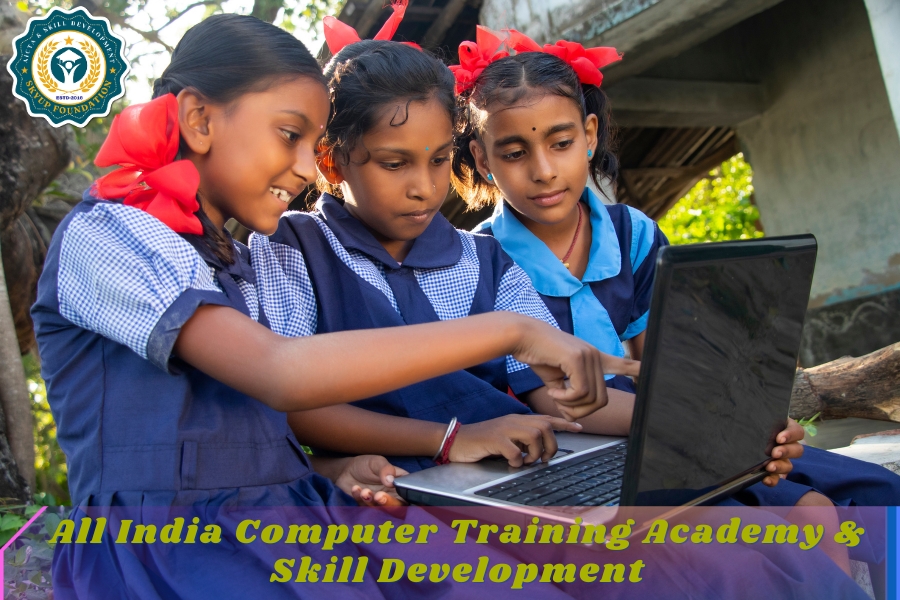
The Computation Education Of Paramount Importance For Rural India:
Computer education has become a pivot of progress and development in a technology-driven world. While urban areas in India have taken rapid strides in plunging into the digital ocean, the rural areas are still stuck due to a lack of infrastructure, resources, and awareness. It has become imperative to remove this dichotomy not only in the name of convenience but also for the holistic development of the country. Computer education in rural India denotes giving opportunities to individuals and communities. Here are the reasons why it becomes the most important of all and how it can be a game changer for rural India.
Why Computer Education is Important in Rural India:
1. Digital Inclusion for All.
Computer education thus emerges as a must to ensure rural populations aren’t left behind in the present digital world. Computer education empowers these people with knowledge and skills to find their way into the global digital economy. Without computer training, rural dwellers may not be able to have access to information, services, and opportunities that are available online, which furthers makes the disparity between urban and rural even greater.
2. Enhancing Employment Opportunities.
Computer education enhances the employment possibilities for the people living in the rural areas. Many job opportunities in rural areas today require even the most basic computer skills. Computer literacy enables jobs in the fields of data entry, online marketing, and even remote clerical work. This prevents a scenario where rural youngsters have to migrate to far-off cities for jobs and, in turn, be able to contribute to the economic growth of their villages.
3.Transforming Agriculture and Rural Development.
Agriculture is considered as the backbone of rural India, and technology can play a wondrous role here. Computer education can teach farmers how to utilize apps and the tools needed for weather forecasting, market pricing, and scientific agricultural practices; crop management software, and budgeting for smaller farmholders in addition to learning of government schemes. This education translates into higher productivity, better income, and better livelihoods.
4.Enhancing Access to Quality Educational Programs.
Though quality education continues to be a scarcity in rural locales, computer education offers a great deal toward ameliorating this route. It enables students to access e-learning platforms, digital resources, and educational software. This, thus, enhances education quality and prepares students for fulfilling the new-age job demands. Furthermore, it allows teachers to conduct more interactive and fun lessons.
5. Improving the Health System.
Telemedicine and Healthcare information systems can be the booster engine for health care in the rural sector. Computer education can make rural health workers efficient in the use of these technologies which will improve health care for villagers. It allows patients online consultations and access to their medical records and health education, reducing the burden of long-distance travel for treating illnesses.
6. Easier Accessibility of Government Programs.
Most government services and their programmes can now be accessed through the Internet. Computer education helps in trying to lessen the gap between the rural populace and online services that form the core of digital identity, subsidy, and financial assistance. Reducing bureaucracies is bound to minimize corruption that usually hinders the smooth functioning of schemes, ensuring that they actually reach the beneficiaries without any intermediaries.
7. Fostering Entrepreneurship and the Growth of Small Business.
A computer education program would be of great benefit to a rural entrepreneur. With education on computer use, the entrepreneur could promote his products online, maintain accounts, and tap into information suitable for business growth. Marketing through e-commerce platforms and social media and using digital tools would enable rural businesses to reach wider audiences and compete in wider markets.
8. Empowering Women and Gender Equality.
Computer education can empower women in rural areas to be able to contribute to earning income and gaining information to become self-dependent. This leads to bridging the way for gender equality and social development. Women can channel their skills to start small businesses, work from home, or pursue higher education, thereby breaking age-old barriers.
9. Facilitating Digital Literacy and Building Critical Thinking.
Apart from teaching technical knowledge, computer education teaches digital literacy, critical thinking, and problem-solving ability, which are essential for informed decision-making, protection against cyber threats, and combatting misinformation. Knowing the digital platform creates a people who can negotiate the complex contemporary world.
10. Community Development.
Computer education fosters communities by connecting rural area with the wide world. It seeks enhanced approaches for communication, collaboration, and information sharing towards social development. This promotes joint brainstorming of problems, innovative development initiatives, as well as further strengthening of community networks.
Challenges Facing Computer Education Programs in Rural India
Even though the advantages of instituting computer education outweighed the disadvantages, rural computer education is faced with the following major challenges:
1. Lack of Infrastructure.
Many rural areas lack basic infrastructure—electricity, internet connectivity, and computer labs. With this kind of impediment, implementing computer education becomes a fuzzy dream.
2. Shortage of Trained Teachers
Rise of qualified trainers on the ground and spreading computer education in rural schools seems so essential. However, the training of local teachers or bringing external trainers has not yet become the priority it deserves.
3. Lack of Funds
Investment in a computer, Internet access, and any form of training is far beyond the financial capacity of most rural schools and communities. Henceforth, government intervention and the support of the private sector will become very pertinent to demolish this wall of hindrance.
4. Cultural and Social Barriers
Some cultures and societal barriers in certain rural communities highly discourage specific sectors of their population, particularly women, from attending computer education.